Holiday traditions · 6 min read
Kwanzaa: First Fruits, Seven Principles, and the Karamu Feast
In many homes, the week after Christmas has its own glow.
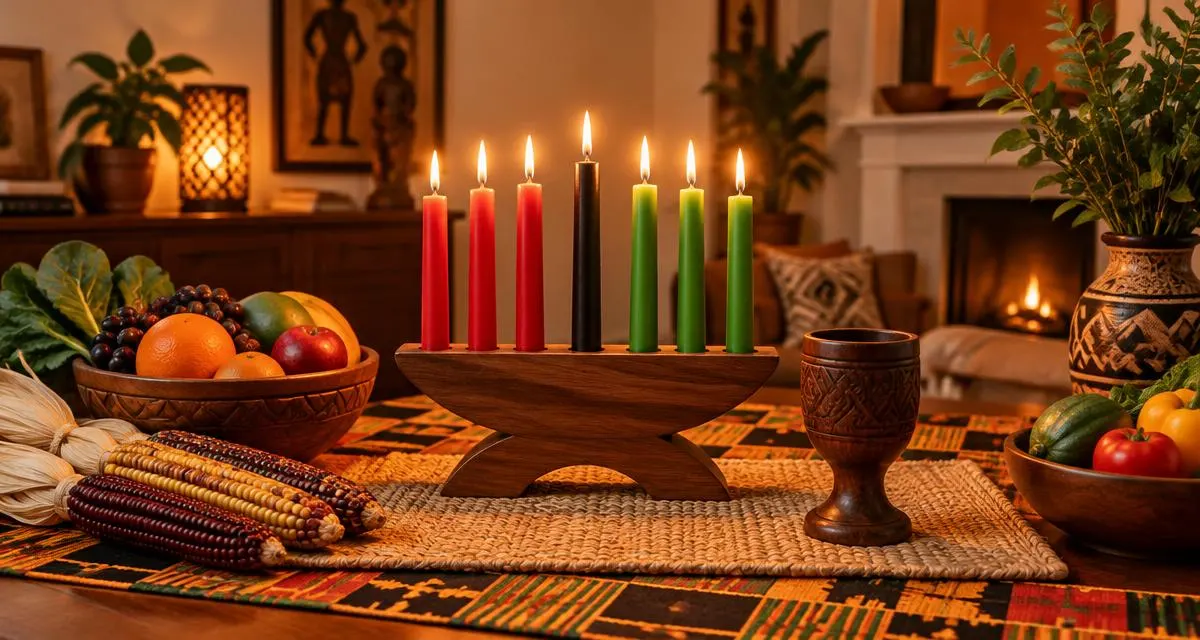
A woven mat is laid on the table. Ears of corn and a bowl of fruit are set beside a wooden candleholder. Each evening, someone lights one more candle, and the family talks about what that day means.
That is Kwanzaa, observed every year from December 26 through January 1. For seven days, families and communities gather to honor African heritage, remember those who came before them, and recommit to the values that hold them together.
And as with so many of our traditions, food is close to the center of it all.
How Kwanzaa Began
Kwanzaa was created in 1966 by Dr. Maulana Karenga, a professor and activist, during a period when many African Americans were seeking stronger ties to their history and culture.
He drew on the harvest celebrations of many African peoples, times when communities gathered to give thanks, share what had been grown, and strengthen their bonds. The name comes from the Swahili phrase "matunda ya kwanza," meaning "first fruits."
Kwanzaa is a cultural holiday, not a religious one. People of many faiths observe it, and many families keep it in their own homes during the same winter season as other holidays.
The Seven Principles
Each day of Kwanzaa is devoted to one of the Nguzo Saba, the Seven Principles. On each evening, families often greet one another with "Habari gani?" ("What's the news?") and answer with the name of that day's principle.
- Umoja (Unity), December 26: to strive for and keep unity in the family, community, nation and race.
- Kujichagulia (Self-Determination), December 27: to define, name, create for and speak for ourselves.
- Ujima (Collective Work and Responsibility), December 28: to build and maintain our community together and to share one another's problems.
- Ujamaa (Cooperative Economics), December 29: to build and support our own stores, shops and businesses, and to profit from them together.
- Nia (Purpose), December 30: to make our collective calling the building and development of our community.
- Kuumba (Creativity), December 31: to do as much as we can to leave our community more beautiful and beneficial than we inherited it.
- Imani (Faith), January 1: to believe in our people, our parents, our teachers and our leaders, and in the righteousness and victory of our struggle.
The Symbols on the Table
A Kwanzaa table is arranged with care. A piece of African cloth is often spread first, then the mkeka is laid down, and the other symbols are placed on or beside it.
- Mkeka (mat): the foundation of tradition and history that everything else rests on.
- Kinara (candleholder): a reminder of ancestral roots.
- Mishumaa saba (seven candles): one black, three red and three green, standing for the seven principles. Black is for the people, red for their struggle, and green for the future and the hope that comes from that struggle.
- Mazao (crops): fruits and vegetables that honor the harvest and the work that produced it.
- Muhindi (corn): an ear for each child in the home, because children are the future.
- Kikombe cha umoja (unity cup): used to pour a libation in remembrance of the ancestors.
- Zawadi (gifts): often given to children, with an emphasis on books and handmade or meaningful items.
The black candle sits in the center of the kinara and is lit first, for Umoja. A new candle is lit on each day that follows until all seven burn together on the final evening.
The Karamu Feast
On December 31, the sixth day, families and communities come together for the Karamu, the Kwanzaa feast.
A Karamu can be a meal in a living room or a large community celebration in a church hall, school or cultural center. Many include music, drumming, dancing, poetry and readings, along with a moment to remember the ancestors and to look ahead to the new year.
There is no single required menu. Hosts often choose dishes that reflect the African diaspora and their own family's roots, from the American South to the Caribbean to West Africa.
In many African American homes, that can mean dishes like these on the table:
- Black-eyed peas, for a hopeful start as the new year arrives.
- Greens, slow-simmered and rich with potlikker.
- Cornbread or hot water cornbread.
- Sweet potatoes, as candied yams or pie.
- Rice dishes, from red beans and rice to jollof.
- Fresh fruit, echoing the mazao on the Kwanzaa table.
Often the meal is shared, with families bringing dishes so that no single cook carries the whole feast. That is Ujima and Ujamaa at the stove: collective work and cooperative effort, served on the same table.
Bringing Kwanzaa to Your Table
Whether your family has celebrated Kwanzaa for decades or you are learning about it for the first time, the heart of the holiday is simple: gather the people you love, remember where you come from, and talk about who you want to be together.
If you are hosting a Karamu, Build My Soul Food Feast can help you work out how much food to make for your guest count, and the recipes below make a warm place to start.
Explore more of the food shared around family tables in our family dinner recipes.
Cook from this story: Black-Eyed Peas with Smoked Turkey, Southern Holiday Greens, Hot Water Cornbread. Plan your own table with How to Plan a Soul Food Dinner for a Crowd.
Sources & Further Reading
- Official Kwanzaa Website — The Celebration
Dr. Maulana Karenga's guidance on arranging the Kwanzaa symbols, the meaning of the colors and the candle lighting.
- Smithsonian National Museum of African American History and Culture — Kwanzaa
Overview of Kwanzaa's 1966 origins, the December 26 to January 1 observance, the Karamu and its cultural rather than religious character.
- Smithsonian NMAAHC — The Seven Principles of Kwanzaa
Describes the Nguzo Saba, the table symbols and the Pan-African colors used during Kwanzaa.