Food history · 4 min read
Souse: Your Great-Granddaddy's Lunchmeat
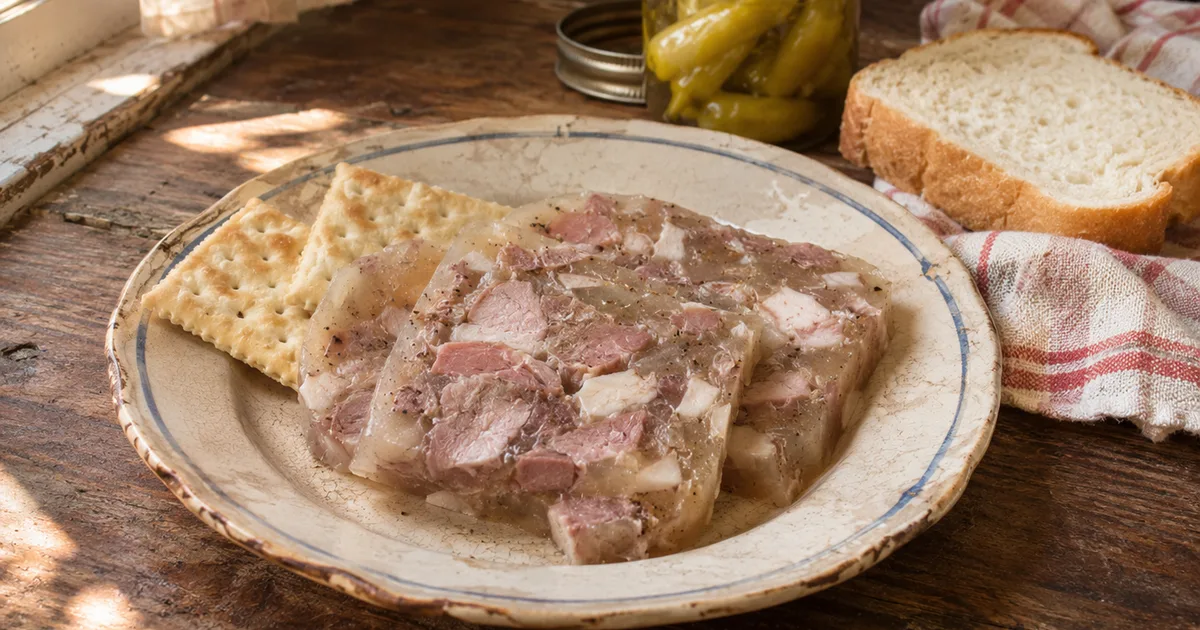
Before refrigerators were filled with neatly packaged turkey, ham, and bologna, there were other familiar choices on Southern tables. One of them was souse.
Depending on where you grew up, you might have heard it called souse meat, head cheese, or pressed hog's head. You may have seen it sliced at a country meat market, served with crackers, or tucked between two pieces of bread.
For some older Southern families, this was simply food. No fancy name. No elaborate presentation. Just something good to eat.
What Exactly Was Souse?
Souse belongs to a long tradition of preparing and preserving different parts of a hog after butchering.
Historical preparations used parts such as the head, ears, and feet. Meat was cooked until tender, removed from the bones, seasoned, and sometimes pressed into a mold that could be sliced.
Vinegar or pickling liquid played an important role in some varieties. Regional traditions differed, and the terms souse and head cheese were sometimes used interchangeably even though recipes and preservation methods varied.
The result was a distinctive savory meat preparation that might be eaten cold, sliced for sandwiches, or served alongside crackers.
When Nothing Went to Waste
Souse tells a larger story about Southern kitchens.
Hog butchering required labor, planning, and practical knowledge. Families made use of portions of the animal that modern shoppers may rarely encounter.
This wasn't unique to one community. But resourceful cooking, inherited skills, and making ingredients stretch became especially meaningful within many African American households navigating limited resources.
The knowledge involved in preparing these foods deserves recognition, even when our tastes have changed.
A Different Kind of Lunchmeat
Imagine a thick slice of souse on bread, perhaps with a little mustard or hot sauce. Or picture a few slices laid out with crackers for a simple afternoon bite.
Not every family ate it the same way. Some preferred it tangy with vinegar. Others remembered more heavily seasoned varieties.
For people who grew up around souse, its flavor and texture may bring back a particular kitchen, neighborhood grocery, or relative.
For younger generations, the question might simply be: What in the world is that?
The Foods We Remember
Food traditions don't always disappear completely. Sometimes they simply move out of the everyday kitchen.
Souse remains available in certain regional markets and specialty shops, but it isn't a standard item on every modern family's shopping list.
Its story reminds us that Southern food heritage includes more than the dishes that became famous. It includes humble lunches, overlooked ingredients, and cooking skills passed from one generation to the next.
Heritage Kitchen reflection: Did someone in your family eat souse? Was it served on sandwiches, with crackers, or straight from the plate?
Keep reading in Heritage Stories, including Sunday dinner traditions and the church community cookbooks that preserved so many family recipes.
Explore more of the food shared around family tables in our family dinner recipes.
Cook from this story: Pork Neckbones and Potatoes, Navy Beans and Ham. Plan your own table with Making It Stretch: The Art of Cooking With What You Have.
Sources & Further Reading
- Colonial Williamsburg — The Butchering and Processing of Pork in Eighteenth Century Williamsburg
Documents historical souse preparation and the relationship between souse, pickled pork parts, and head cheese.