Main Dishes
Old-Fashioned Meatloaf with Tomato Gravy
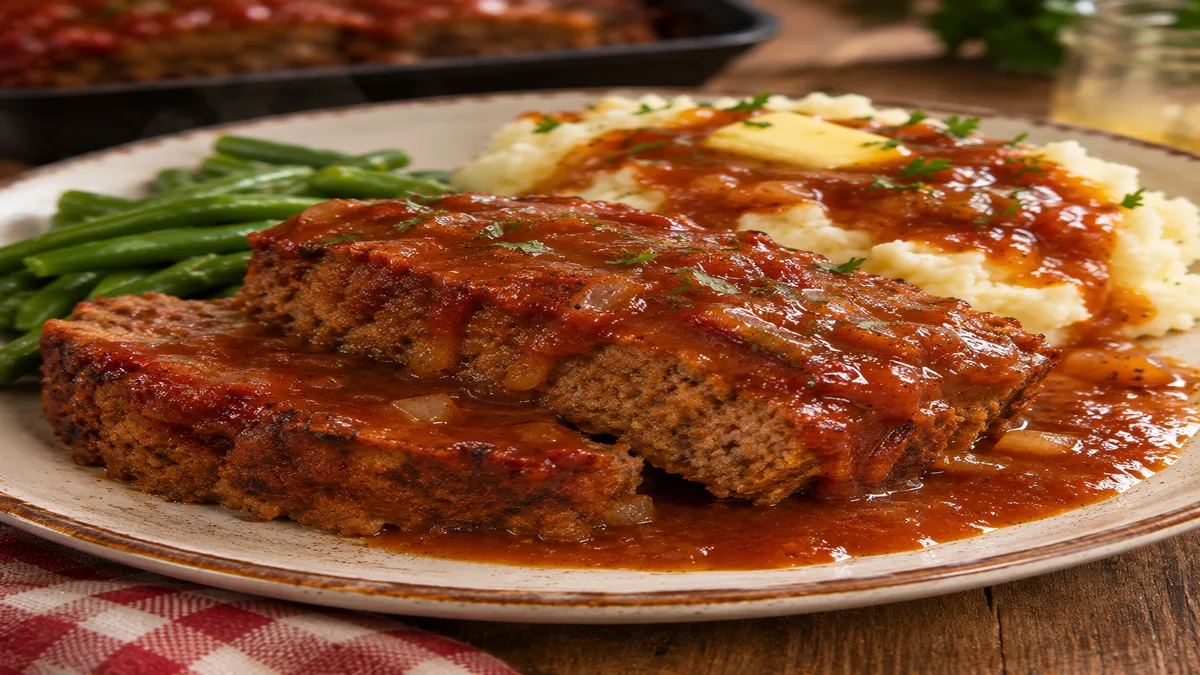
This is homestyle meatloaf without the ketchup glaze. The loaf is seasoned simply and bound with saltine crumbs soaked in milk, baked free-form so the outside browns, then sliced thick and covered with a Southern tomato gravy — onions softened in fat, a quick flour roux, canned tomatoes and beef broth simmered until spoonable.
Prep time
25 min
Cook time
1 hr 10 min
Resting
10 min
Total time
1 hr 45 min
Servings
8 · One 2-pound loaf, about 8 thick slices
Origin Story
Meatloaf became an American weeknight standby because it turns a pound or two of ground meat, some crackers or bread and an egg into a filling supper for a family, often with enough left for sandwiches. Pan gravies grew up beside it for the same reason: a little fat and flour stretch the meal. Tomato gravy — tomatoes thickened with a roux and simmered with onion — is a distinctly Southern preparation served over biscuits, rice, grits and meats. Cooks make it many ways, and no single family or region can claim it.
Ingredients
Meatloaf
- 2 pounds ground beef, preferably 80/20
- 1 cup finely crushed saltine crackers (about 28 crackers)
- 1/2 cup whole milk
- 2 large eggs
- 1 small onion, finely grated or minced
- 2 garlic cloves, minced
- 1 tablespoon Worcestershire sauce
- 1 1/2 teaspoons kosher salt (use 1 teaspoon with salted crackers or fine table salt)
- 1 teaspoon black pepper
- 1 teaspoon paprika
- 1 teaspoon dried thyme, optional
Southern Tomato Gravy
- 2 tablespoons fat skimmed from the cooked meatloaf pan, or unsalted butter
- 1 small onion, finely diced
- 2 tablespoons all-purpose flour
- 1 can (14.5 ounces) diced tomatoes with their juices, or crushed tomatoes
- 3/4 to 1 cup low-sodium beef broth
- 1/2 teaspoon black pepper
- Salt to taste
- Small pinch of sugar, only if the tomatoes taste sharp
- Pinch of cayenne, optional
Instructions
- 1
Heat the oven to 350°F. Line a rimmed baking sheet with foil or use a 9 × 13-inch baking dish.
- 2
In a large bowl, stir the cracker crumbs into the milk and let them soak for 5 minutes.
- 3
Add the eggs, onion, garlic, Worcestershire, salt, pepper, paprika and thyme and mix well. Add the ground beef and mix gently with your hands just until evenly combined.
- 4
Shape the mixture into an even free-form loaf about 9 inches long, 5 inches wide and 2½ inches tall on the prepared pan. Keep the ends as thick as the middle so it bakes evenly.
- 5
Bake for about 60–75 minutes, until the thickest part of the center reads 160°F on an instant-read thermometer. Ovens and loaf shapes vary, so go by temperature rather than time.
- 6
Let the meatloaf rest on the pan for 10 minutes before slicing so the juices settle and the slices hold together.
- 7
During the last 20 minutes of baking, start the gravy: melt butter in a skillet over medium heat. If you'd like to use drippings instead, wait until the meatloaf is done, spoon 2 tablespoons of the cooked fat from the pan into the skillet and heat it until it sizzles.
- 8
Add the diced onion and cook, stirring, for 5–6 minutes, until soft and lightly golden. Sprinkle in the flour and stir constantly for 1–2 minutes to cook out the raw taste.
- 9
Gradually stir in the tomatoes with their juices, then add 3/4 cup broth a little at a time, stirring to keep it smooth. Add the pepper.
- 10
Simmer for 8–10 minutes, stirring often, until thick enough to coat a spoon. Add more broth to loosen it, then season with salt, a pinch of sugar if needed and cayenne if you like.
- 11
Slice the meatloaf into thick slices and serve with the warm tomato gravy spooned over the top.
Notes
- Dry meatloaf: the beef was too lean or the loaf baked past 160°F. Use 80/20 beef and check the temperature early.
- Crumbly slices: cut too soon or too thin. Rest the loaf for 10 minutes and slice about 1 inch thick.
- Thin gravy: simmer a few minutes longer, stirring, until it coats a spoon.
- Sharp or acidic gravy: add a small pinch of sugar or a pat of butter and simmer another minute.
Heritage Kitchen Tips
- A free-form loaf browns on all sides; a loaf pan steams the meat in its own fat. If you do use a 9 × 5-inch loaf pan, expect it to take toward the longer end of the time range.
- The mixture should feel soft and moist but hold its shape. If it slumps, add a tablespoon or two more cracker crumbs.
- Use a serrated or very sharp knife and slices about 1 inch thick to keep them from crumbling.
Kitchen Note
Crushed crackers soaked in milk hold moisture inside the loaf as it bakes, so the slices stay tender instead of dry. Mix with your hands only until everything is combined; overworking packs the meat tight and makes it rubbery. The gravy is ready when it coats the back of a spoon and a line drawn through it holds for a second. If it's thinner, simmer a little longer; if it's thicker, add broth a splash at a time.
Ingredient substitutions
- Plain dry breadcrumbs, same amount
- Saltine crackers
- Chicken broth
- Beef broth, for a lighter gravy
Storage and reheating
Refrigerate meatloaf and gravy separately within 2 hours for 3–4 days. Freeze slices, wrapped well, for up to 3 months; thaw in the refrigerator. Reheat slices covered in a 325°F oven or in a skillet with a splash of broth, and reheat the gravy until bubbling, until leftovers reach 165°F.
Safety note
Ground beef is safe at 160°F measured in the thickest part of the loaf; reheat leftovers to 165°F. Use only fat from the fully cooked meatloaf for the gravy, and bring the gravy to a full simmer.
Round out the meal
Helpful kitchen tool
Soul Food Serving Calculator
Know exactly how much fried chicken, greens, and mac to make — no guessing, no leftovers gone to waste.
Open calculatorRelated guide
How to Plan a Soul Food Dinner for a Crowd
A menu framework, a cooking timeline and the oven math nobody warns you about.
Read the guideThe story behind it: Why Sunday Dinner Means So Much in Black American Families
Frequently asked questions
Related recipes
Main Dishes
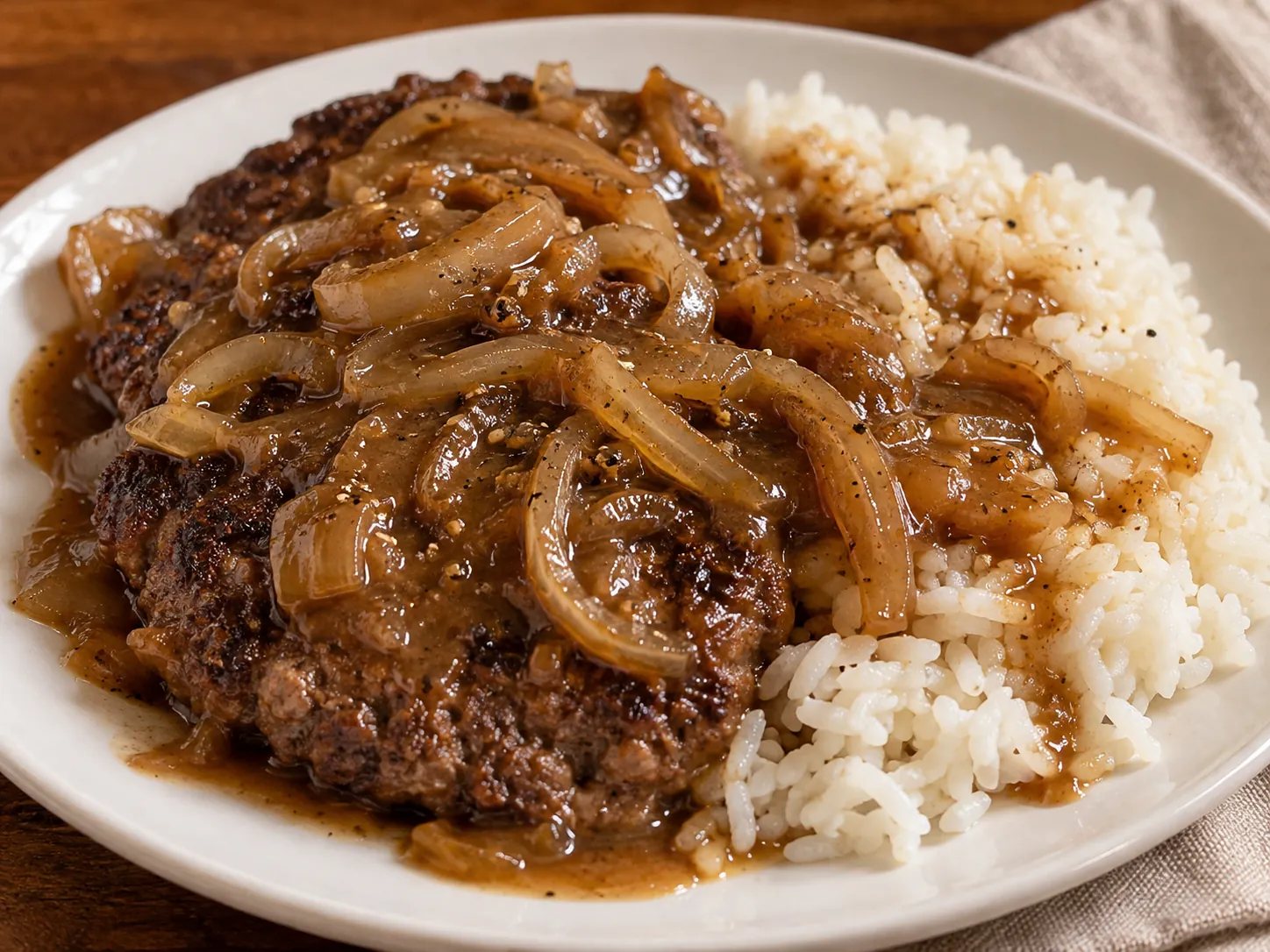
Chopped Steak with Onions and Gravy
Beef patties browned in the skillet, then simmered under soft onions in a glossy pan gravy — made for spooning over white rice.
Main Dishes
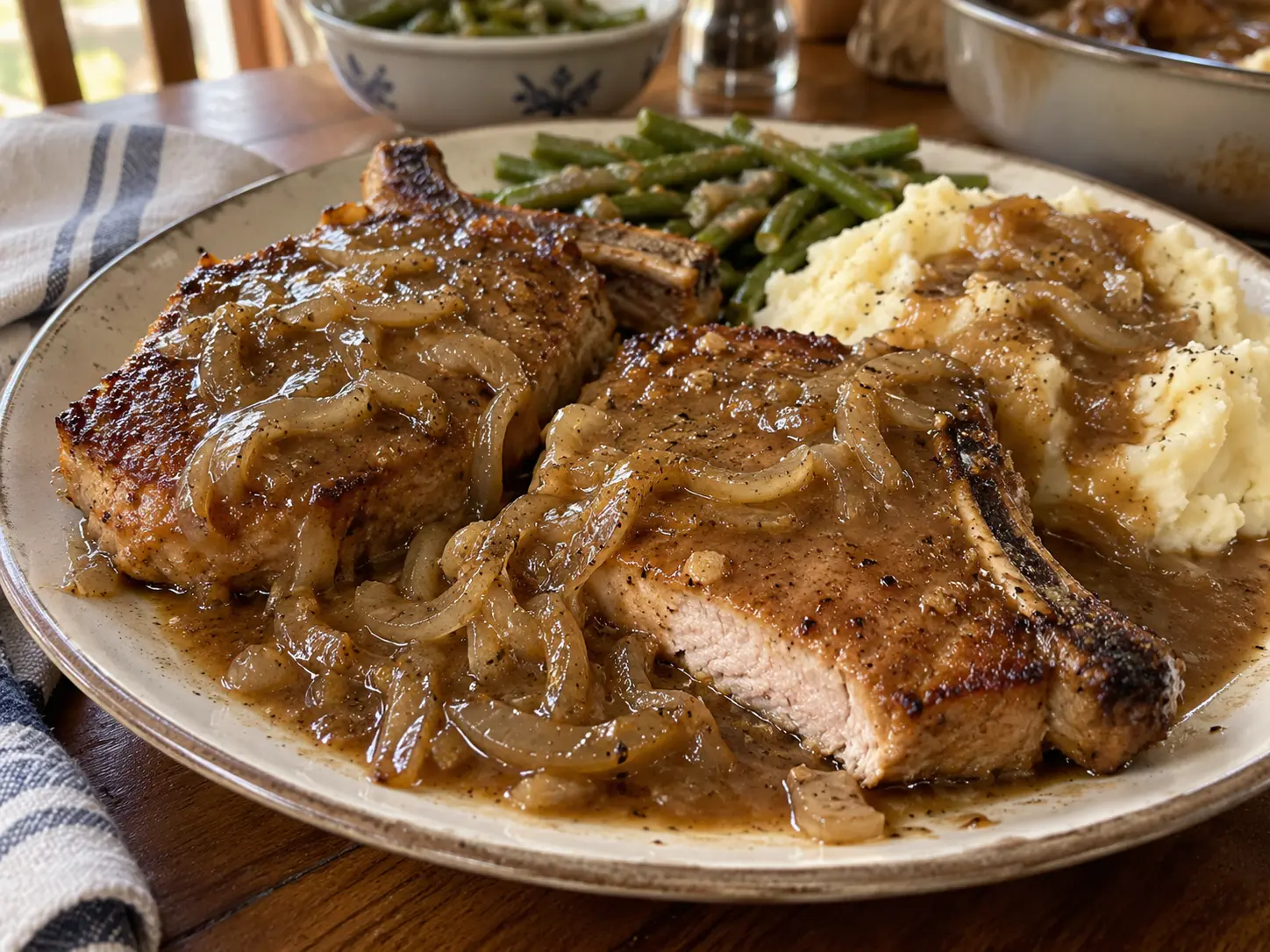
Smothered Pork Chops
Browned chops finished slow in a dark onion gravy you'll want to spoon over rice twice.
Main Dishes
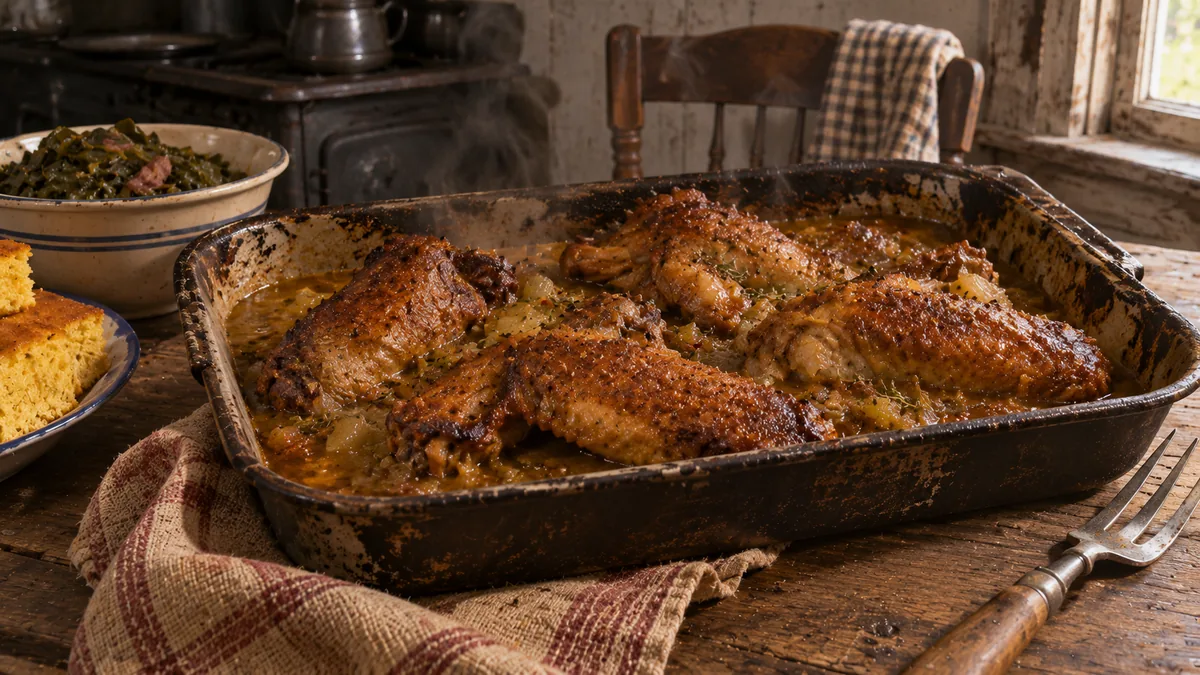
Smothered Turkey Wings
Wings baked down in onion gravy until the meat pulls away from the bone on its own.